

We salute them all for their classic and iconic consumer products.
We love you!
accessories

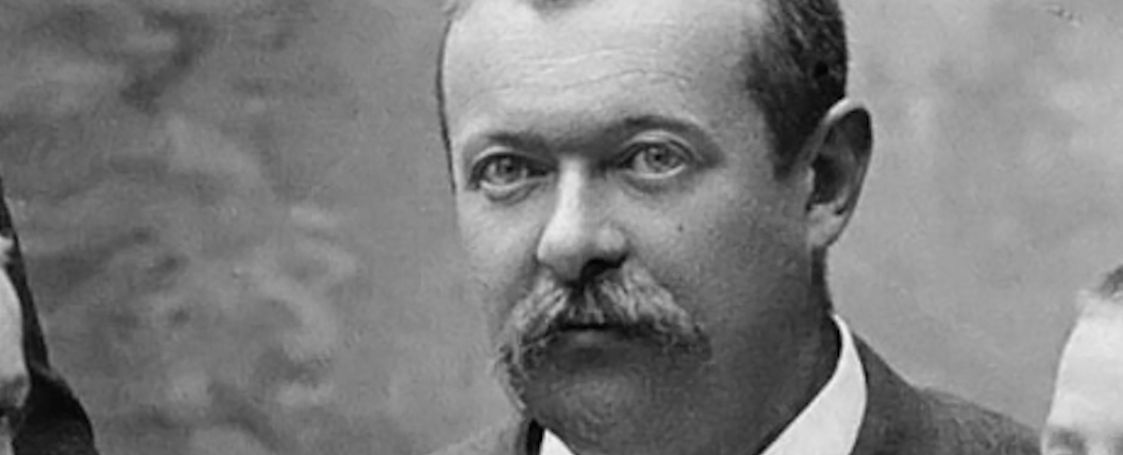

GEORGES VUITTON
1857 - 1936
Born in 1857, Georges Ferréol Vuitton was the only child of French designer and trunk maker Louis Vuitton and wife Clemence-Emilie Vuitton. After Louis Vuitton's death in 1892, George succeeded his father as the head of the brand Louis Vuitton.
Throughout Georges Vuitton's life as the head of Louis Vuitton, he created and changed many aspects of the brand helping it become one of the most popular companies in France. Unfortunately, due to the popularity of the brand, many counterfeit products sprang up around France and were being sold for much cheaper prices reflecting the poor quality with which they were made.
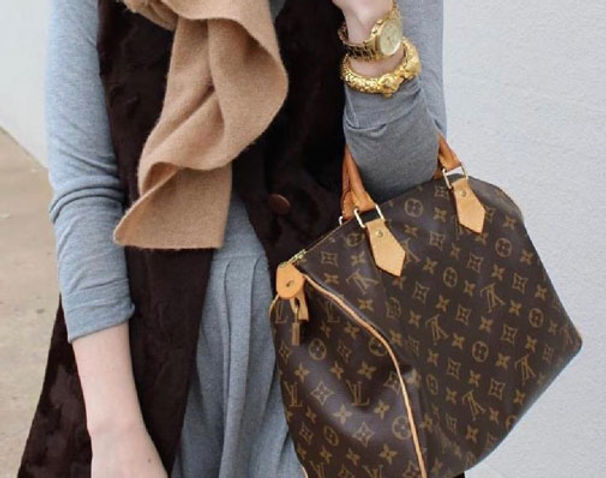
In 1896, in response to the prevalent counterfeiting of the brand's products, Georges decided to create a complicated pattern that would cover his trunks and decrease the amount of counterfeits being made due to the difficult nature of creating the pattern. This resulted in the creation of the LV monogram canvas, both as a push back on fakes and a homage to his father Louis Vuitton. The canvas material would now be covered with diamonds, the LV logo, flowers and quatrefoils and other shapes that have become a key part of the brands image. Despite its creation in 1896, it was not until 1905 that the patent for the LV monogram canvas was granted. Perhaps the most iconic travel bag sporting the LV monogram pattern is the Speedy 30 bag (descendant of the larger Keepall bag) – designed by Georges Vuitton in 1896 and introduced in 1930. The Speedy 30 is easily one of the most recognizable carry/travel bags in the world.
A large part of Georges Vuitton's life was his love of automobiles and traveling in them. This fondness for travel by automobile became an essential point of Louis Vuitton trunks and influenced how the brand strategized the innovation and creation of their products. Georges saw that Louis Vuitton (LV) trunks were being made without the idea of them being put into automobiles. In Georges' mind he wanted to innovate and change this. He decided that a traveler should be able to travel in a car with the same amount of clothing (etc.) that one would be able to bring on a boat or a train, so he ventured to create a more sturdy and space efficient trunk than was previously manufactured.
Georges' solution was to introduce new materials not previously used to create LV trunks, including a black, water proof cloth that coated every trunk to ensure durability. In addition, each closure on the trunk was beveled, making them less susceptible to the issues that rain and dust presented. Georges understood that when traveling by car, the trunks needed to be stacked on top of each other to use space efficiently. He revolutionized the creation of trunks by squaring the edges and making the tops and bottoms flat, making them perfect for stacking rather than the typical rounded edges that was common for the time.
While many travelers used trunks in the late 1800s and early 1900s, the locks used to secure them were easily picked by burglars, particularly those who recognized the expensive Louis Vuitton trunks and what may possibly be kept inside by its wealthy owner. To combat this, Georges and his father Louis, decided in 1886 to innovate the lock and create a brand new one. After many years, Georges was finally able to patent a lock that was so difficult to pick, that even the celebrated escape artist Harry Houdini would not be able to escape from a Louis Vuitton trunk made with the new lock. Despite Houdini not accepting the challenge, the lock is still effective at its job, and the same patented lock is used by Louis Vuitton today in all its trunks. The new lock was coined the revolutionary new 'Tumbler Lock' and contains two spring buckles.
As with most luxury brands, Louis Vuitton does not offer discount prices or rebates to its customers, whether they be new or regular customers. Rather than offering discounts, Georges and his eldest son Gaston-Louis chose to gift their loyal and continuing customers with mini Louis Vuitton trunks. The trunks could not be bought or ordered, but were gifts given at the choosing of Georges and were delivered to the client's home. The trunks were covered in the typical LV monogram canvas. Inside the canvases, Vuitton would put a bouquet of fresh flowers. Also inside of the trunk was a zinc tray so as to prevent any damage from water or moisture from the flowers. Receiving these gifts was considered an honor as they were exclusive and could not be bought. After the flowers died Georges allowed the recipient of the gift to choose how the trunk would be recycled – whether it be for sewing material or as a cigarette box, he did not care. Today, Louis Vuitton no longer practices gifting mini LV trunks. Flower trunks however, are still available as part of their hard-sided collection which can be purchased in-store.
During George's tenure at the helm of Louis Vuitton, he began what is now a large part of Louis Vuitton's marketing: Le Voyage books. George created the first travel book published by Louis Vuitton, which has now turned into a 30 city strong collection of travel guides including San Francisco, Hong Kong, Tokyo, Cape Town, Berlin and Amsterdam, and a matching mobile app has also been created. Georges' book was published only in French in 1901 and centered on Paris, with 3 original editions existing each at a length of 294 pages. It is incredibly rare, and has dimensions of 165mm x 255mm, and has a preface written by French Journalist and Anarchist, Émile Gautier, it's caption translated into English being "From the most remote times to the present day". The cover of the book was illustrated and signed by French painter and illustrator Charles Henri Pille (1844–1897) depicting a nineteenth-century love of the Middle Ages, and showing Vuitton as trunk makers.
Despite a busy work life heading the now global luxury leather goods brand Louis Vuitton, Georges Vuitton married Josephine Patrelle (1863-1964) and they were married until his death in 1936. Their children (in chronological order) were Marie Louise, Gaston Louis, the twins Jean and Pierre, and their youngest son Marcel Vuitton. In 1893, a year after founder Louis Vuitton died, Georges and a relative (Henry) traveled to the United States by boat passing through Ellis Island immigration to travel to the Chicago World Fair to show off their luxury leather goods, making it the first time that Louis Vuitton products were to be displayed and sold outside of France. Records show that Georges and Henry traveled multiple times to the United States passing through the Ellis Island Immigration stop entering the country again in 1897.
Whilst he was still alive, Georges' middle children who are twins, Jean and Pierre took their love of flying to a new level by creating 3 prototypes for helicopters, naming them Vuitton-Hubert, Vuitton II and Vuitton III, all after their father's famous family name. The helicopters were never formally used but were a display of the Vuitton family's creativity.
On October 26, 1936 in Asnières-sur-Seine in France, Georges Ferréol Vuitton died at the age of 79. His wife, Josephine Vuitton (née Patrelle) outlived him and died many years later in 1964 in France. All their children outlived them, with Gaston, the eldest of their sons, taking over the brand after his father's death in 1936, until his own death in 1970, ending the three-generation lead of the Louis Vuitton brand by Vuitton men.
Source: wikipedia.org